Vampires
His Property (A Dark Vampire High School Bully Romance) (Vampire Boy Swords): Prince of Londinium (Dead Sun: Prince of Londinium (A Dark High School Bully Romance) (Vampire Boy Swords) Book 1)Vampires are the transformed descendants of the Taleians, and their existence is central to the hidden history of Londinium. They are not presented merely as predatory monsters: they are the surviving result of an ancient curse, a dispersed people whose blood remains embedded in later generations, and a species whose psychic and physical inheritance governs identity, reproduction, political legitimacy, and intimate claims. Their history turns Clara Driscoll’s apparent human biography into a question of dormant blood, delayed transformation, and dangerous belonging.
Origin in the Taleian Curse
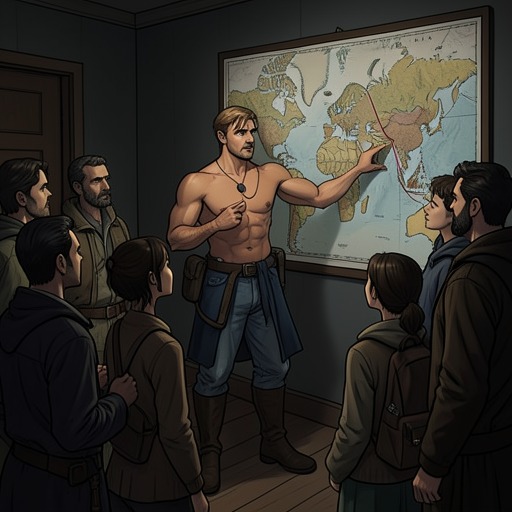
According to Prince Octavius’s account, the Taleians once formed one of two races in ancient Briton, alongside the Druids. They possessed distinctive gifts: Taleian men were renowned warriors with exceptional sword skills and strength, while Taleian women possessed powerful psychic abilities. Their clans were governed by Morrigan, the Queen of the first Royal Clan, whose consort and Knight of Swords was traditionally drawn from the Breannin Clan, the second royal clan and the source of her knights.
The Druids envied the Taleians’ lands, Queen, and military power. Their response was a curse that changed the Taleians into Vampires. The transformation did not simply alter isolated individuals; it turned the population against itself through blood lust. The cursed Taleians hunted one another while the Druids and other humans pursued them, driving the survivors from their lands and scattering them across the world in separate clans. Vampirism therefore begins as an act of conquest and persecution, but it also becomes the condition through which the Taleian people survive beyond the destruction of their original society.
The curse carried an especially devastating political consequence. Morrigan and the Knight of Swords were murdered by the Druids while attempting to aid their people with the help of the Magician, the Queen’s powerful magical adviser. Their deaths severed the original royal order. A new Queen was not born until 1893, and the later Queen came from a union between a Taleian male and a human female rather than from an unbroken Taleian line.
Bloodlines and Hybrid Awakening
The Taleians could no longer reproduce among themselves, so Taleian men turned to human women and produced Taleian-human hybrids. The resulting children carried a latent inheritance rather than immediately displaying their complete supernatural nature. They did not attain their true form as a Taleian vampire until later in life, or until their bodies judged the transformation suitable. Awakening was described as involving a small death before the individual entered the true form.
The hybrid condition imposes a visible limit on physical development. Such children always appear no older than twenty-five years, even though the timing of their full transformation is not necessarily the same for every individual. The combination of arrested appearance, dormant blood, and delayed awakening makes vampirism a condition that can remain hidden inside an apparently ordinary human life.
This inheritance extends far beyond the original clans. Octavius states that everyone in Londinium and in the other cities of the broken world is descended from the Taleians and their hybrids. The ancient inheritance entered the population’s DNA and lay dormant alongside strains associated with Lycans and other supernatural creatures. These altered bloodlines helped many people survive the frozen wastelands on the surface after the world lost its sun and drifted through space in search of a new one. The blood of the survivors also contains a newer alien strand introduced by beings who came to take refuge on the world centuries earlier.
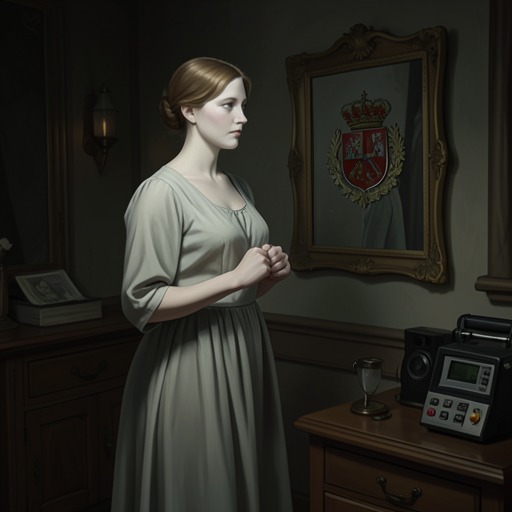
Clara Driscoll becomes a direct challenge to the apparent boundary between human and vampire. She discovers that she possesses the psychic gifts of a Taleian hybrid but has not yet completed the full change into a vampire. Her condition reveals that the inheritance can be active in mind and potential before it becomes visible in the body. The disclosure also connects her hidden royal identity to the broader biological history of the species.
Vampirism, Mating, and the Body
Vampire society is organized not only by descent but also by an inherited system of mate selection. The Book of Talus is a magical book in which a child’s name appears at birth beside the name of the designated fated mate. The book thus converts reproduction and intimacy into matters of recorded destiny, linking private attachment to the continuity of the Taleian-derived population and its royal order.
The ancient mating ritual adds a physical and competitive dimension to that destiny. Several duels must be fought before two fated mates can be joined by blood. The contests establish a psychic bond: once it is formed, the partners’ thoughts flow as one. Only after that bond is created does the male bite the female, marking the transition from psychic connection to bodily union. The sharp incisors pressed against Clara Driscoll’s wrist make the ritual’s promise and threat visible at once; the bite is not merely erotic contact, but the bodily completion of a social and supernatural claim.
The ritual had been dampened in recent times by the order of the Emperor. Its suppression does not erase the old inheritance. Instead, it forces those who still feel the pull of ancient customs to seek muted forms of claiming a mate. The conflict between ceremonial restraint and instinctive practice explains why vampire identity in Londinium is politically charged: the body remembers a heritage that the ruling regime attempts to silence.
Political Memory and Royal Descent
Vampires are inseparable from the history of the Empress and the Five Princes. After hybrids helped the people survive and evolve, the Empress possessed the DNA strands of all their people and governed wisely with the Five Princes. The Book of Talus supplied mates and advisers who would guard her immense power and keep her loved and safe. In this account, royal government is simultaneously biological, marital, and protective: bloodline, chosen companionship, and political counsel form one structure.
The Emperor rejects that legacy. He is described as wanting no reminder of the Empress’s rule, the hybrids’ contribution to survival, or the aliens who joined the people. He found a way to murder the Empress, her child, and the Princes, making the suppression of vampire history part of a broader campaign to eliminate the previous order. Vampires therefore carry a political memory that the current regime has reason to conceal. Their blood is evidence of both the ancient civilization and the crimes that replaced it.
This history also explains the possessive language used around Clara Driscoll. Prince Octavius senses her psychic gifts and feels a pull toward her, while Darius Constantine and Lord Byron Phraeon are also associated with competing claims upon her. Octavius presents possession and deadly rivalry as consequences of the old mating system, declaring that he will fight to the death to win her. Clara’s divided response exposes the ritual’s coercive underside: the woman may be treated as the prize awarded to the winner, compelled to spend eternity with him even if she loved another man as her true mate.
Narrative Significance
The vampire is both a supernatural creature and a historical archive. The species embodies the aftermath of the Druids’ curse, the collapse of the original Taleian kingdoms, the forced interweaving of Taleian and human blood, and the later addition of alien ancestry. Its history makes biological identity unstable: a person may appear human, carry psychic gifts, possess royal descent, and still be approaching a transformation into a Taleian vampire.
For Clara Driscoll, this instability converts discovery into danger. Her lost identity is not only a family secret; it determines whether ancient rules can claim her, whether rival men may challenge for her, and whether her own body will complete an awakening she has not chosen. Her uncertainty about wanting both Darius Constantine and Prince Octavius reflects the novel’s larger tension between personal desire and inherited structures that define intimacy as ownership, blood, and fate.
Vampires consequently occupy an ambiguous place in the novel’s moral and imaginative order. They are victims of an ancient curse, survivors whose altered bodies protected humanity in a frozen world, inheritors of psychic and martial gifts, and participants in rituals that can reproduce domination. Their persistence suggests that suppressed history cannot be eliminated simply by royal decree: it remains in DNA, instinct, memory, and the psychic bonds through which the past continues to govern the living.